Media Theory
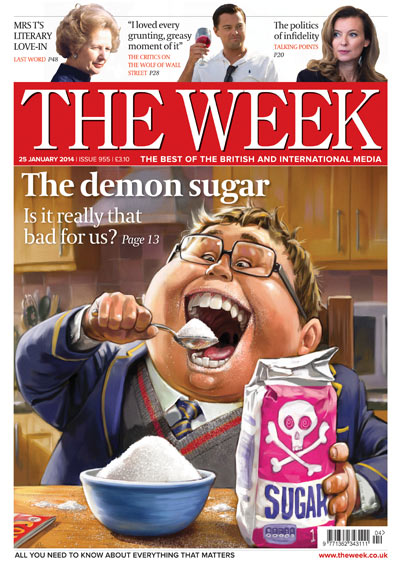
"In this post I'm going to be looking at the way a range of theories can be applied to media texts, by doing this I will be make an initial decision in terms of which media theory I will likely use in the production of my main text".
Example 1: Barthes Semiotics, The Study of Signs & How it engages the audience.
The Week uses a range of media theories including Barthes Semiotics to demonstrate different ideologies in their media texts. In this example, signs are demonstrated through an image of a skull, which was placed on the sugar to show it as deadly. This was encoded in order for the audience to decode the meaning of the signs. The current affair in this magazine is clearly to do with unhealthy eating and overweight problems within the nation. The use of a fat child eating purely a bowl of sugar (which no one does) creates a disorderly effect on the audience, and again, this is created with the employment of Barthes Semiotic Theory.

Vanity Fair employs a variety of media theories which represent their text is many different ways. Firstly, bell hooks' theory is represents the movement of feminism, to end patriarchy and sexism, which is a discrimination between genders, particularly woman. The use of a woman, who is in great power (an aristocrat) being identified as a 'rebel' is very important. The juxtaposition usage (ROYAL REBEL) really reflects the main goal of bell hooks' theory, that women should oppose, that they should develop an 'oppositional gaze'.

Comments
Post a Comment